

Why should we reuse water?
What is the difference between recycled water and reclaimed water?
How can recycled/reclaimed water benefit us?
How is water recycled/reclaimed?
Is recycled/reclaimed water safe?
How is recycled/reclaimed water different from raw water?
Does recycled/reclaimed water need to be kept separate from other water?
Who regulates water reuse?
What is desalination?
Why should we desalinate water?
What is the difference between brackish water and seawater desalination?
Is desalination affordable?
What are the environmental impacts of desalination?
What happens to the salt that is removed from the water?
What is the difference between graywater and reuse/recycled/reclaimed water?
Water reuse offers a climate-independent water source that is dependable, locally-controlled, and generally beneficial to the environment. Water reuse allows communities to become less dependent on groundwater and surface water sources and can decrease the diversion of water from sensitive ecosystems. Additionally, water reuse may reduce the nutrient loads from wastewater discharges into waterways, thereby reducing and preventing pollution. This “new” water source may also be used to replenish overdrawn water sources and rejuvenate or reestablish those previously destroyed.
These terms are generally used interchangeably and which word is used depends on the region. Recycled or reclaimed water is water that is used more than one time before it passes back into the natural water cycle. Thus, water recycling is the reuse of treated water for beneficial purposes such as agricultural and landscape irrigation, industrial processes, toilet flushing, or replenishing a groundwater basin (referred to as groundwater recharge).
Recycled water can be used in numerous applications to satisfy most water demands, depending on the level of treatment. The water is treated to meet regulatory guidelines for the intended end use. Typical uses for recycled/reclaimed water include:
Water utilities use a variety of well-tested and reliable treatment processes to recycle/reclaim water. Utilities generally describe the various stages of treatment rather than the technologies utilized when referring to water quality, as there are multiple treatment techniques for achieving essentially the same result. Generally speaking, the four core stages of treatment are Primary Treatment, Secondary Treatment, Tertiary or Advanced Treatment, and Disinfection. The number of treatment steps will vary based on how the water will be used. Most recycled water, however, will undergo some form of disinfection.
Reclaimed water is highly engineered for safety and reliability so that the quality of reclaimed water is more predictable than many existing surface and groundwater sources. Reclaimed water is considered safe when appropriately used. Reclaimed water planned for use in recharging our aquifers or augmenting our surface water receives adequate and reliable treatment before mixing with naturally occurring water and undergoing natural restoration processes. Some of this water eventually becomes part of our drinking water supplies.
Through the natural water cycle, the earth has recycled and reused water for millions of years. Water utilities use technology to speed up these natural processes. The Colorado River and the Mississippi River are two common sources of raw water in the United States. Along these rivers, communities often discharge wastewater upstream from other communities that will later treat the water for drinking purposes. The water from these rivers has been reused, treated, and piped into the water supply a number of times before the last downstream user withdraws the water. Water that is perceived as raw water has often been used recently. The quality of the water is much more important than the source of the water. Water utilities employ the best technology and follow stringent guidelines to treat water to a quality commensurate with the intended use.
Nonpotable recycled water goes through a separate pipeline system to the customers. It is completely separate from the drinking water pipeline system. Periodic cross connection tests ensure that the nonpotable recycled water pipelines are not accidentally connected to the drinking water system. In addition, there is ongoing monitoring and testing of the nonpotable recycled water and drinking water systems to protect the public's health.
Several states consider reclaimed water viable as a water source alternative, and have developed regulations with specific water quality requirements and/or treatment processes for a variety of reuse applications. In other states water reuse regulations have been developed with the primary intent of providing a disposal alternative to surface water discharge. A few states have no specific regulations or guidelines on water reclamation and reuse, although programs may still be permitted with approval on a case-by-case basis. In 2004, the U.S. Environmental Protection Agency developed a technical document entitled "Guidelines for Water Reuse", which was developed specifically for application in those states with no regulations for all or some type of reuse.
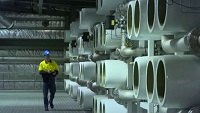
Desalination is the process of removing dissolved salts from water. The two most common desalination technologies are membrane and thermal technologies. Membrane processes rely on permeable membranes to separate salts from water. Membrane processes can be pressure-driven (reverse osmosis or RO) or voltage-driven (electrodialysis). Reverse osmosis is currently the most common desalination treatment method. The thermal process involves heating saline water to produce water vapor, which is then condensed and collected as fresh water.
An increasing number of communities are facing water supply challenges due to increasing demand, drought, depletion and contamination of groundwater, and dependence on a single source of supply. About 97.2% of the water on earth is saline and can only be used through desalination technology. Communities with access to saline waters may need to consider desalination as an additional source of water as part of an overall plan to manage resources. Diversification and local control are essential to good planning and self-sustainability.
Brackish water refers to water supplies that are more saline than freshwater, but much less salty than seawater. Brackish water may result from mixing of seawater with fresh water, as in estuaries, or it may occur in brackish aquifers. The level of salinity in water is measured in total dissolved solids (TDS). In a reverse-osmosis system, the greater the TDS concentration of the water, the higher the pressure needed for the pumps to push water through the membranes, and consequently, the higher the energy costs.
The affordability of desalination depends on the quality of the source water and a host of other factors. Brackish water desalination usually costs less than seawater desalination because brackish water is generally cleaner and contains fewer total dissolved salts. Advances in desalination technologies in recent years have reduced costs considerably. Communities decide on the affordability of desalination projects in the context of local needs when integrating a plan that combines water conservation with traditional and alternative sources of supply.
As with any major construction project, an Environmental Impact Statement (EIS) is required by regulators for a desalination plant prior to construction. EIS studies are conducted to identify and investigate possible impacts on soil, air, and water resources and to recommend steps to avoid or reduce these impacts. Because the ocean is a habitat, EIS studies look carefully at how marine life is impacted during desalination processes. The WateReuse Foundation conducts and supports research that examines both the potential environmental impacts of desalination and potential solutions.
It needs to be disposed of safely. Concentrate management can become one of the most important factors in determining the feasibility of a plant. Concentrate produced during seawater desalination can be disposed through deep well injection on land or returned to the ocean in a controlled process to avoid detrimental effect to the environment or marine life. For concentrates produced in inland facilities (brackish water), a few other options exist. These include disposal to surface water bodies, evaporation ponds, or to wastewater treatment plants. In some instances, the concentrate can also be utilized beneficially for industrial processes.
Graywater (also grey water, greywater, gray water) refers to the reuse of untreated water drained from baths, showers, washing machines, and sinks (i.e., household wastewater excluding toilet wastes and—in most cases—dishwasher and kitchen sink wastewaters). Homeowners sometimes use graywater for irrigation and other water conservation applications. Some communities have ordinances controlling how homeowners may use graywater, while others discourage its use. Graywater is not treated, and can contain bacteria and other pathogens. Recycled water refers to the regulated use of highly treated municipal wastewater.
.jpg)
Planning and utilizing best management practices ensures that water reuse is practiced safely.